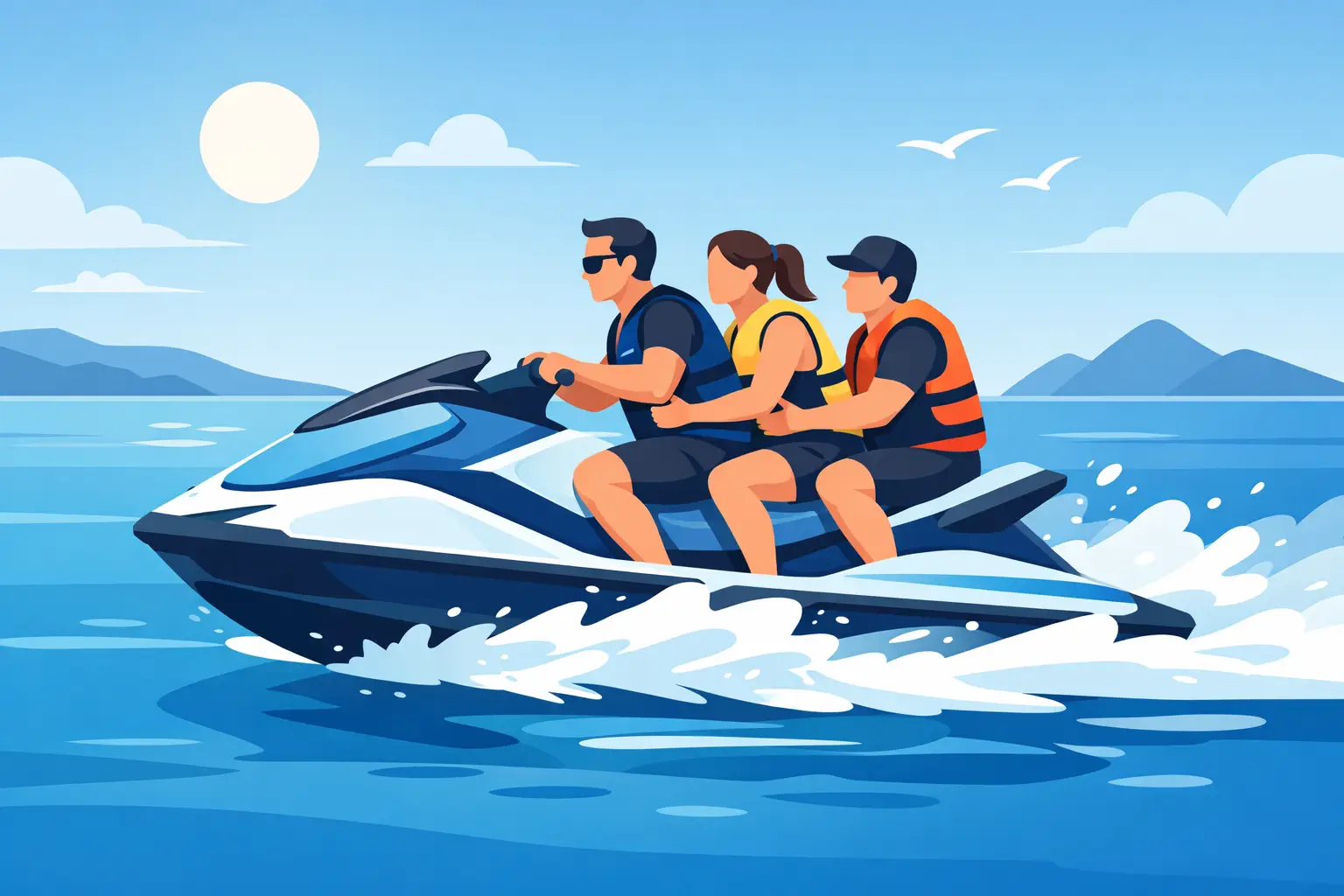
You can fit three people on a jet ski and still have a great time – but only if the machine is built for it and the total load makes sense. That is the real story behind the jet ski weight limit 3 riders question. It is not just about whether three seats are available. It is about total weight, rider balance, water conditions, and how the craft performs once everyone is onboard.
A lot of riders see “3-person” on a personal watercraft and assume that means any three adults can hop on and rip across the lake with zero issues. Not quite. Three-person capacity means the watercraft is designed to carry up to three riders within a specific weight range set by the manufacturer. If your combined weight pushes past that limit, the ride can feel sluggish, unstable, and harder to control. That is where fun starts dropping fast.
On lakes like Keowee, Hartwell, and Jocassee, that matters more than people think. Smooth morning water can make a fully loaded ski feel manageable. Add afternoon chop, boat wakes, tight turns, and a less experienced driver, and the same setup can go from easy to sketchy in a hurry.
What jet ski weight limit 3 riders really means
Every jet ski has a posted capacity. Usually, that includes both the number of people and the maximum load. The load is not only rider body weight. It can also include gear, life jackets, and anything else carried on the machine. So if a jet ski says it seats three, that does not mean three large adults automatically fit within the safe operating range.
This is where people get tripped up. Seating capacity and weight capacity are related, but they are not the same thing. A three-seat WaveRunner may legally and safely hold three riders, but only if the total load stays within the manufacturer limit and the craft still sits and handles the way it should.
That also affects how the machine accelerates, planes, and corners. A lightly loaded ski feels quick and playful. A maxed-out ski feels more planted but less aggressive, and if the load is too close to the limit, the craft may struggle more in rough water or during aggressive maneuvers.
Why the limit matters on the water
Ignoring weight capacity is not a minor technicality. It changes how the jet ski behaves in real conditions.
First, acceleration takes a hit. Even a strong three-seat machine loses some snap when loaded with three adults. That does not mean it becomes boring. It just means the performance edge softens, especially out of the hole.
Second, handling changes. More weight shifts the center of gravity and lowers how the craft rides in the water. That can make it feel steadier in some straight-line situations, but slower to respond and easier to swamp in heavy chop or careless stops.
Third, reboarding gets tougher. If someone falls off, climbing back on with multiple riders is easier when the load is comfortably within range. When the ski is overloaded, every movement feels less controlled.
And then there is comfort. Three riders packed shoulder to shoulder may technically fit, but if the back passenger is cramped and the driver has limited room to move, the ride goes from premium to awkward. Nobody books a day on the lake for that.
Three riders works best in certain combinations
The best three-rider setup is usually one adult driving and one or two lighter passengers. Think couples with a child or teen, or three average-size riders who are not pushing the upper end of total capacity. That keeps the machine more balanced and the experience more enjoyable.
Where things get tight is with three full-size adults, especially if everyone is tall or broad-shouldered. Even if the jet ski can technically carry the load, the ride may not feel nearly as free or sporty. The rear passenger usually feels that first.
So the question is not only, “Can three people ride?” It is also, “Will this still feel good for the kind of day we want?” If you want speed, sharper handling, and more room to move, two riders often feels better than squeezing in three.
Passenger placement makes a difference
If you are riding with three people, placement matters more than most first-timers realize. The heaviest rider should generally be closest to the center of the craft, which usually means the driver position if that person is also operating. The second rider sits directly behind, and the lightest rider often works best in the rear seat.
That setup helps the jet ski stay more balanced front to back. It also gives the driver the best control of steering input and throttle response.
Passengers need to stay with the movement of the machine. Leaning unpredictably, shifting around mid-turn, or sitting stiff while the driver carves across wakes can throw off balance fast. A jet ski is not a couch on the water. Everyone onboard is part of the ride.
Lake conditions change the answer
This is where the jet ski weight limit 3 riders conversation gets real. A setup that feels perfectly fine on flat water at low speed may feel crowded and heavy once the lake gets busy.
On calm mornings, carrying three riders is often easier and more comfortable. The water is cleaner, visibility is better, and the machine does not have to fight constant wake action. Later in the day, with more traffic and rougher surface conditions, extra passenger weight becomes more noticeable.
That does not mean three riders is a bad call. It means the safe and smart decision depends on conditions. A beginner driver with three people onboard in weekend chop should ride more conservatively than an experienced rider with one passenger on glassy water.
Why rental operators care about weight capacity
A quality rental operation is not trying to kill the vibe by asking about rider count and combined size. They are protecting your experience.
The right machine should feel stable, responsive, and confidence-building, especially for first-time riders. If a rental company loads a ski beyond what feels practical, they are setting customers up for a weaker ride and a tougher learning curve. Premium operators know better.
That is why newer three-seat models are such a sweet spot for group fun. They are built for social riding, beginner-friendly stability, and enough performance to keep things exciting. But even with modern equipment, capacity rules still matter. New does not cancel physics.
For a brand like Landshark Watersports, that balance is the whole point – show up, gear up, and get a machine that is ready to perform without turning your lake day into a guessing game.
How to know if three riders is a good idea
Start with the manufacturer capacity on the specific jet ski. That is the hard limit. Then be honest about rider size, confidence level, and what kind of ride you want.
If your group includes two adults and a smaller third rider, you are probably in a much better spot than three large adults trying to go full throttle all afternoon. If everyone wants maximum speed and room to move, splitting into separate machines may be the better play.
Also think about ride duration. Ten minutes with three riders is one thing. An hour of shifting weight, bouncing through wakes, and sharing limited space is another. Comfort matters more the longer you stay out.
If you are unsure, ask before launch. A good rental team can tell you quickly whether your rider combo makes sense for the machine and the day’s conditions.
The smart move is not always the max move
There is a big difference between what a jet ski can do and what makes for the best ride. Three riders can absolutely work on the right machine, with the right combined weight, in the right conditions. That is real. But the best setup depends on whether you want a chill cruise, a beginner-friendly first ride, or a faster, more open-water feel.
The sweet spot for a lot of groups is simple. If you are under the posted limit and everyone fits comfortably, go enjoy the ride. If the ski feels overloaded on paper or cramped in practice, do not force it just because there are three seats.
A good lake day is not about stuffing every person onto one machine. It is about getting the setup right so the ride feels smooth, safe, and worth talking about after you hit the dock. Ride fast when it makes sense. Ride smart every time.